
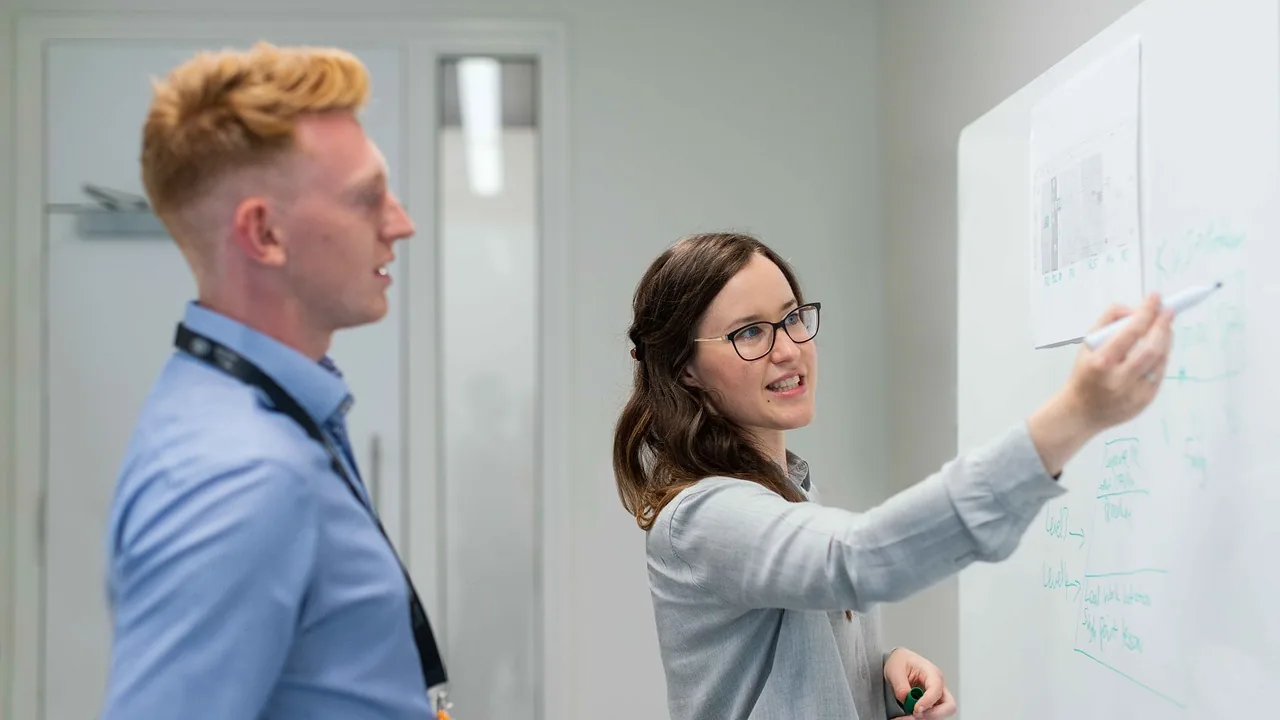
Almost every company has them, usually without a name: the service technicians who swap tricky cases in the kitchen, the admins from different sites in a shared chat, the people in accounting who help each other before year end. In knowledge management these groups are called communities of practice. This guide explains what the term means, how a community differs from a team and how to build one.
What is a community of practice?
A community of practice (CoP) is a group of people who share a concern or a passion for something they do and learn how to do it better as they interact regularly. That is the definition used by Etienne Wenger and Beverly Wenger-Trayner, and it is the one most sources quote. Wikipedia adds that communities of practice are largely self-organized and that members do not need to sit in the same place: many meet online.
Anthropologist Jean Lave and Etienne Wenger coined the term in their 1991 book Situated Learning. They studied how apprentices learn and found that most learning happens not with the master but with journeymen and more advanced apprentices. The community works as a living curriculum. Wenger expanded the idea in his 1998 book Communities of Practice, and in 2002 he wrote a practical book for companies with Richard McDermott and William Snyder.
Not every organization uses the label. According to Wenger-Trayner, communities of practice also go by names such as learning networks, thematic groups or tech clubs. The name matters less than whether the three defining elements are there.
Why companies use them
Eric Lesser and John Storck describe four areas where communities of practice can improve how an organization performs: new employees get up to speed faster, customer questions are answered more quickly, rework and reinventing the wheel go down, and new ideas for products and services appear. Underneath all four is tacit knowledge: experience that is not written in any manual and travels best through conversation.
The three elements: domain, community, practice
Not every group is a community of practice. Wenger names three elements that have to come together:
- Domain. The group shares an area of interest, such as pricing quotes, IT security or customer support. Membership implies a commitment to that area. A circle of friends or a list of contacts is not a CoP.
- Community. Members talk to each other, help each other and share information. Having the same job title is not enough: claims processors who never talk to one another do not form a community. Members do not have to work together every day, though.
- Practice. Members are practitioners. Over time they build a shared repertoire of experiences, stories, tools and ways of handling recurring problems. That separates them from a community of interest, whose members simply like a topic.
Only the combination makes a community of practice. Without the practice it is a fan club. Without the community it is a mailing list. Without the domain it is a social get-together.

Community of practice vs team vs network
In a 2000 Harvard Business Review article, Etienne Wenger and William Snyder presented the community of practice as an organizational form that complements teams and work groups rather than replacing them. The key difference: a team is set up to deliver a result. A community forms because people want to get better at their craft.
| Form | Purpose | Members | Lifespan |
|---|---|---|---|
| Community of practice | Build skills, share experience | People who practice the craft, mostly by choice | As long as the topic matters to members |
| Project team | Deliver a defined result | Assigned by management | Until the project ends |
| Department | Run ongoing work | Set by the org chart | Permanent |
| Network | Pass on contacts and information | People who know each other | Loose, no fixed rhythm |
| Community of interest | Follow a topic | Anyone interested, with or without practice | Open ended |
Community of practice examples
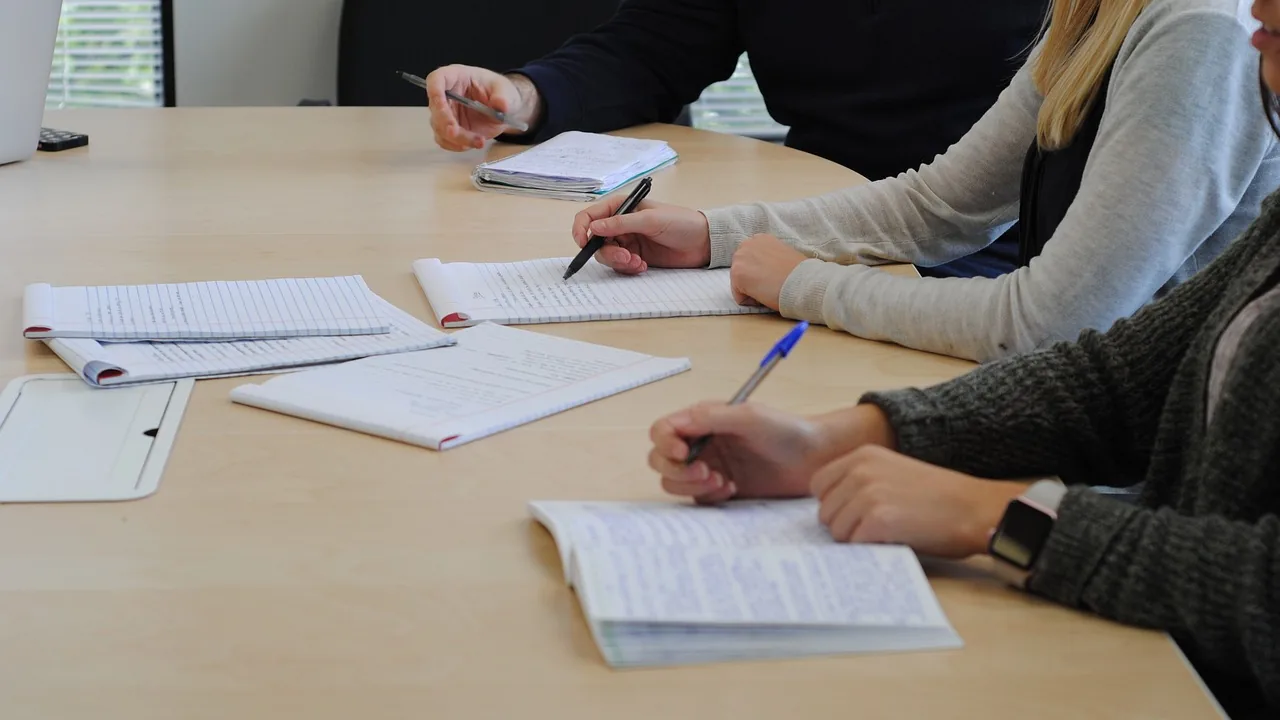
Wenger-Trayner give several examples from organizations. Engineers at a car maker who work on windshield wipers deliberately collect their tricks and lessons in a knowledge base. Nurses who meet for lunch in a hospital cafeteria, on the other hand, may not realize that these conversations are one of their main sources of knowledge about caring for patients. Both are communities of practice; they just differ in how deliberate they are.
A public example is the UK government. The Service Manual on GOV.UK lists cross-government communities, among them accessibility, agile delivery, content, data science, design and user research, and explains how to set up a new one.
A made-up example for a small business: a building services company with three sites has six service technicians. Once a month they meet on video for 45 minutes. Each brings one case they could not solve straight away. Whatever worked goes into a shared folder with photos. After a year the company has a collection of typical faults that used to exist only in the head of its most experienced technician.

The 5 stages of a community of practice
Wenger, McDermott and Snyder derived five stages from many cases. A community can go through them but does not have to.
- Potential. A few people notice they share the same questions and look for others like them.
- Coalescing. The group agrees on its topic, goals and ways of exchanging, such as a regular slot and a channel.
- Maturing. The real work starts: building and sharing knowledge. New members usually join, and the group adjusts its own rules.
- Stewardship. The community has reached a level most members are happy with. More knowledge is taken out than put in, and the task is to keep it current.
- Transformation. The community loses importance because people use other sources or the topic fades. It ends, merges into another group or finds a new focus.
How to build a community of practice in 6 steps
You cannot order a community into existence; you can only start it and look after it. That is why Wenger prefers the word cultivating. These six steps follow his seven principles for lively communities.
- Pick the domain. Choose a topic that several people deal with every day and that the business cares about, for example quoting or customer support.
- Find a core group and a host. Two to four people carry the topic, and one of them sends invitations and keeps things moving. Wenger distinguishes a small core group, active members and a usually larger periphery that mostly listens. Listening counts as taking part.
- Set a rhythm. A fixed slot, say 45 minutes once a month, works better than ad hoc meetings.
- Mix formats. Case discussions, short talks, open questions and now and then a guest from outside. Besides the shared meeting, people need smaller settings where they can ask an awkward question.
- Capture the results. Keep solutions, templates and lessons learned in one shared place. A knowledge map shows who in the community is the go-to person for what.
- Show the value. Ask regularly what the meetings achieved and tell others. Managers make sure the time counts as working time.
Limits: what a community of practice does not do
A community of practice is a strong way to share experience. It has limits you should know about:
- It depends on participation. Lack of time, groups that grow too big and personal friction slow the exchange down. When the core group runs out of time, the community goes quiet.
- Not everyone shares everything. Some people hold back knowledge because it is tied to their role, position or reputation. That is one way tribal knowledge stays tribal.
- The knowledge mostly stays in heads. What is shared in conversation is only useful to others if someone writes it down. Without documentation, the community itself is the storage.
This becomes critical when the person who knew the most leaves. The community can then only help the successor with what that person shared before. With a low bus factor, that is rarely enough. For that case you need a deliberate knowledge transfer.
When someone with a lot of knowledge leaves
That is the moment SkillPass is built for: the person who is leaving has one conversation with an AI interviewer, by voice or text. It asks about tasks, processes, tools, contacts, exceptions and experience, and follows up where details are missing. It usually takes 60 to 90 minutes and can be paused. The result is a handover handbook as a PDF that the community can also use as material.

SkillPass is not a tool for communities of practice: it has no forum and no chat, and it is not a wiki or a knowledge management system. It captures the knowledge of one person in one conversation, has no access to emails, files or screens and only knows what was said in the conversation. See how SkillPass works. Without AI, the free handover document generator gives you a structure to fill in.
Frequently asked questions
What is a community of practice in simple terms?
It is a group of people who do the same kind of work and meet regularly to get better at it by sharing experience. Examples are engineers from different teams who compare solutions, or nurses who swap cases over lunch.
Who came up with the term community of practice?
Jean Lave and Etienne Wenger coined it in their 1991 book Situated Learning, based on their study of apprenticeship. Wenger expanded the concept in 1998, and in 2002 he published a book on cultivating communities in organizations with Richard McDermott and William Snyder.
What is the difference between a community of practice and a team?
A team is set up by management to deliver a defined result by a deadline. A community of practice forms because people want to get better at their craft. Members usually join by choice, often from different teams, and the community lasts as long as the topic matters to them.
What is the difference between a community of practice and a community of interest?
Members of a community of interest share an interest in a topic, like fans of a certain kind of film. Members of a community of practice are practitioners: they do the work themselves and build a shared repertoire of experience, tools and solutions.
Can a community of practice replace a handover when someone leaves?
No. The community only knows what the departing person shared before. Tasks, access, contacts and special cases still need a deliberate handover, for example with a handover document or a conversation that produces a handover handbook.
Sources
As of November 28, 2026
- Wenger-Trayner: Introduction to communities of practice
- Community of practice (Wikipedia)
- Legitimate peripheral participation (Wikipedia)
- Harvard Business Review: Wenger and Snyder, Communities of Practice: The Organizational Frontier
- GOV.UK Service Manual: Communities
Image credits: Photos via Pixabay (Pixabay Content License): explaining at the whiteboard by This_is_Engineering, conversation at a glass table by Vilkasss, notes at a meeting table by sarahblocks, discussion around a tablet by sameersindhu. Screenshot: SkillPass.
Someone leaving soon? Capture their knowledge while there is still time.
A laptop and keys can be returned, experience cannot. With SkillPass, the person who is leaving has a conversation with an AI. The result is a handover handbook for their successor.
Start a handover